Piedmont
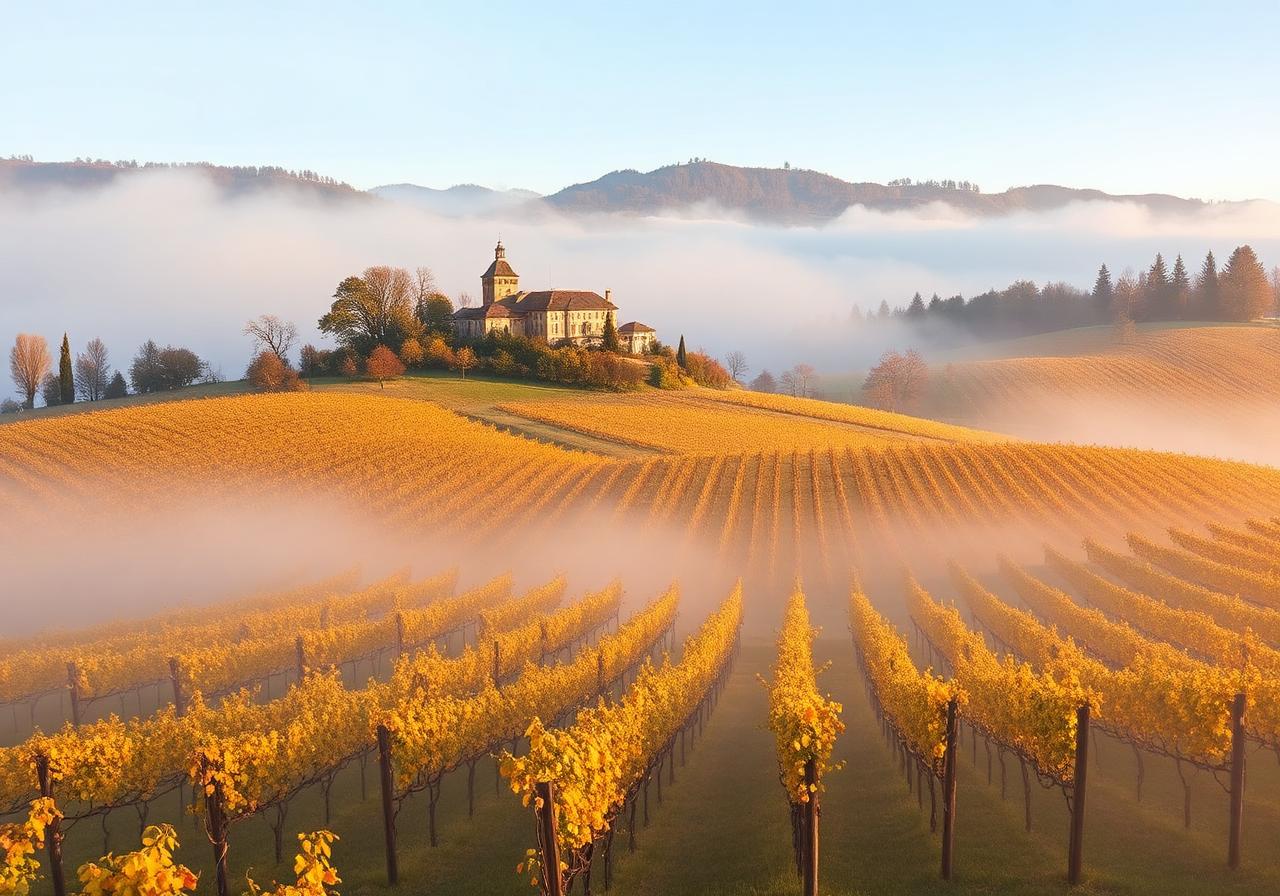
At the foot of the Alps, Piedmont is a region of fog, wine and ritual — where lunch lasts four hours and the white truffle is currency.
Five reasons Piedmont stays with you.
- White truffle harvest in Alba (Oct–Dec) — a global pilgrimage
- Barolo and Barbaresco vineyards rolling through the Langhe
- Birthplace of the Slow Food movement
- Royal Savoy Turin — porticoed boulevards, Egyptian Museum
- Alpine lakes — Orta and Maggiore — without the Como crowds
Best time to visit · September–November for harvest and truffle. May for vineyards in flower.
At the Foot of the Mountains
Piedmont — Piemonte, "the foot of the mountains" — sits hemmed by the Alps on three sides, and that frontier position shaped everything. Once home to Ligurian tribes and then Rome, the region's modern identity began in the 16th century, when the House of Savoy made it their power base. Controlling the Alpine passes between Italy and France, the Savoys built Turin into a refined capital of arcaded boulevards and royal palaces — and a culture that still feels, on the surface, more French than Italian.
The Cradle of a Nation
Piedmont's largest claim is that modern Italy was, in a real sense, born here. In the 1850s Turin became the engine of the Risorgimento, the movement to unify the Italian peninsula. The House of Savoy provided the new nation its royal dynasty, and Turin gave it its first prime minister, Count Camillo Benso di Cavour — himself a Langhe landowner who helped bring modern Barolo into being. When Italy was proclaimed in 1861, Turin briefly served as its first capital before the honor passed to Rome. The city went on to become an industrial powerhouse too: FIAT, Lavazza, and Martini all began here.
Fog, Wine, and the Slow Life
Piemonte's other identity is at the table, and it may be the most serious eating-and-drinking region in Italy. The Langhe hills around Alba — a UNESCO World Heritage landscape — produce Barolo and Barbaresco, the profound, age-worthy reds made from the Nebbiolo grape (nebbia means "fog," for the mists that settle over the vineyards at harvest). Autumn brings the white truffle of Alba, hunted at dawn with dogs and celebrated at a fair that draws the world. And it was in the unassuming town of Bra that the Slow Food movement was founded in the 1980s — a fitting birthplace for a region built on the long lunch.
Start here if you have a long weekend.
Truffle forests, Barolo hills, and slow-food's birthplace.
Five doorways into Piedmont — each town with its own light, language, and rhythm.
Alba
The capital of white truffle, ringed by vineyards.
Barolo
A castle, a wine and a one-street village that defines a region.
Neive
One of Italy's 'Borghi più belli' — sleepy, perfectly preserved.
Bra
Birthplace of the Slow Food movement.
Orta San Giulio
A romantic lake town facing a monastery on its own tiny island.