Umbria
Hilltowns crowned with basilicas, black truffle and lentils from Castelluccio, and a spirituality that softens the light.
Five reasons Umbria stays with you.
- Giotto's frescoes in the Basilica of San Francesco, Assisi
- Black truffle from Norcia and lentils from Castelluccio
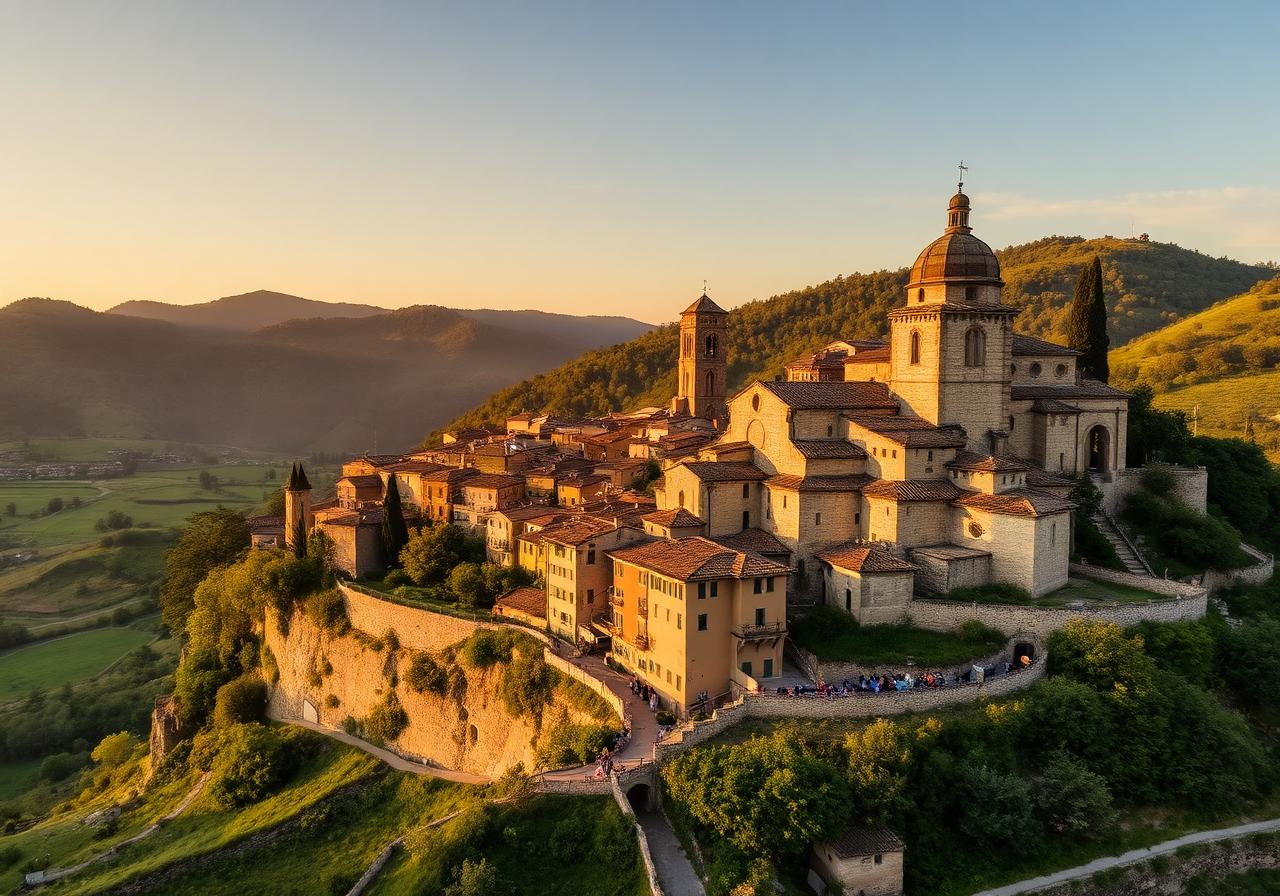
- Hilltowns at every turn — Spello, Spoleto, Orvieto
- Sagrantino di Montefalco — a profound, age-worthy red
- A spirituality and quiet that Tuscany has lost to the crowds
Best time to visit · May–June (wildflowers) and September–October (harvest, truffle).
The Green Heart of Italy
Umbria is the only region in peninsular Italy that touches neither the sea nor a foreign border — landlocked, hilly, and green, the quiet center of the country. It takes its name from the Umbri, one of Italy's most ancient peoples, who settled the eastern hills — Gubbio, Assisi, Spoleto — as far back as 1000 BC. Across the Tiber to the west lay their rivals the Etruscans, who built Perugia and Orvieto. The two were eventually swept up by Rome, which drove the Via Flaminia through the region; you can still see Roman bones in towns like Spoleto and Spello, and it was beside Lake Trasimeno that Hannibal ambushed and destroyed a Roman army in 217 BC.
Saints, Popes, and Fortresses
After Rome fell, the Lombards founded the Duchy of Spoleto, which held much of Umbria for some 600 years. Then came the long centuries under the Papal States, and with them the bitter rivalry between Guelphs (who backed the Pope) and Ghibellines (who backed the Holy Roman Emperor) — a conflict written into the landscape as the rocche, the papal fortresses that still crown towns like Spoleto, Assisi, and Narni. Above all, Umbria became "la Terra dei Santi," the Land of Saints: Benedict of Norcia, patron of Europe, was born here, and in the 13th century a young man from Assisi renounced his wealth to found a new order built on poverty and humility — Saint Francis, whose basilica, frescoed by Giotto, remains one of Italy's most sacred places.
Frescoes, Truffles, and Quiet
The Renaissance left Umbria luminous — Perugino and his pupil Raphael, Pinturicchio's chapels, Giotto's cycle in Assisi. And the modern region keeps its old rhythm: black truffles from the Valnerina, lentils from the high plain of Castelluccio, the age-worthy Sagrantino wine of Montefalco, and a stillness that its neighbor Tuscany has largely traded away to the crowds. Umbria is the Italy of slow mornings and long views — green, medieval, and unhurried.
Start here if you have a long weekend.
The green heart of Italy.
Five doorways into Umbria — each town with its own light, language, and rhythm.
Assisi
St Francis's pink-stone hilltown above an Umbrian plain.
Spello
Roman gates, geranium-draped lanes — possibly Italy's most floral village.
Orvieto
A tufa-rock plateau crowned by one of Italy's great Gothic cathedrals.
Spoleto
Roman stones, Romanesque cathedral, and a famous summer festival.
Norcia
The Sibillini foothills — Italy's capital of cured pork and black truffle.