Alto Adige
Speck and strudel, Lagrein and grüner Veltliner — a bilingual mountain region of UNESCO peaks and storybook villages.
Five reasons Alto Adige stays with you.
- UNESCO Dolomites — perhaps Europe's most dramatic peaks
- World-class skiing (Sellaronda, Plan de Corones)
- Bilingual culture — speck and strudel meet espresso
- More Michelin stars per capita than anywhere in Italy
- Storybook alpine villages with painted facades
Best time to visit · June–September for hiking; December–March for skiing.
The Italy That Speaks German
Alto Adige is unlike anywhere else in Italy — a place where the road signs, the food, and the first language are as often German as Italian, and where the Dolomites stand in for the Mediterranean. Its story explains why. Settled astonishingly early — Ötzi the Iceman, the 5,300-year-old mummy older than the pyramids, was found in these mountains — the region took its name and identity from the medieval County of Tyrol, which consolidated here in the 12th and 13th centuries around Castle Tyrol near Merano.
From 1363, Tyrol passed to the Habsburgs, and for over 550 years South Tyrol was Austrian — German-speaking, alpine, and Catholic, with Innsbruck and Vienna as its capitals. That changed only in the 20th century. Promised to Italy as an inducement to enter the First World War, the territory — then nearly 90% German-speaking — was annexed in 1919 by the Treaty of Saint-Germain. Under Fascism it was renamed "Alto Adige," German schooling was banned, and Italian families were encouraged to settle. The tension simmered for decades until a hard-won 1972 Statute of Autonomy gave the province sweeping self-government and made it officially bilingual (trilingual in the Ladin valleys, where a third ancient Romance language still survives).
Two Cultures, One Table
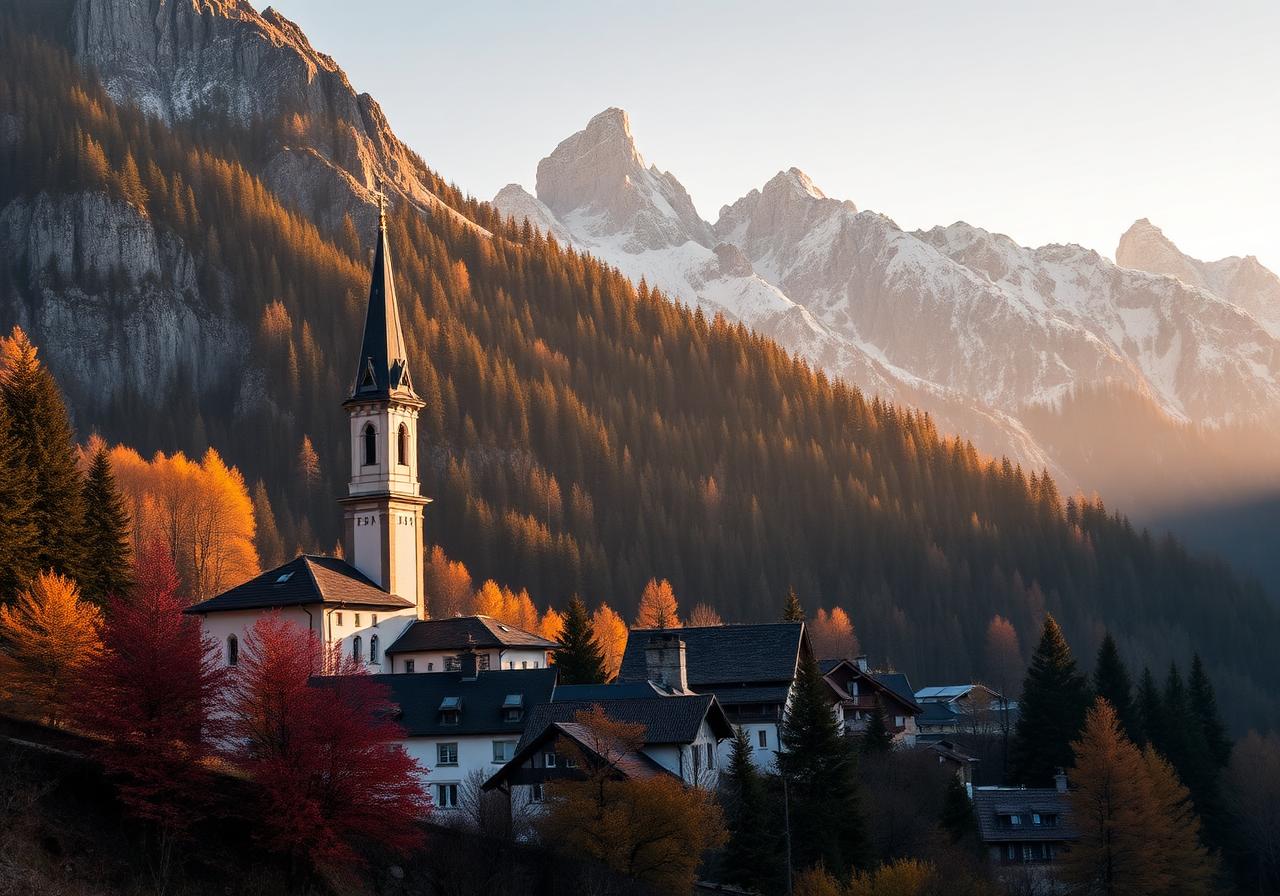
The result is a genuinely dual culture, and you taste it everywhere: speck and Schlutzkrapfen alongside espresso and pasta, strudel beside Italian wine. The native grapes — the red Lagrein, the aromatic Gewürztraminer — are world-class, and the province quietly holds more Michelin stars per capita than anywhere else in Italy. Above it all rise the UNESCO Dolomites, among the most dramatic peaks in Europe, drawing hikers in summer and skiers to the great circuits in winter. Storybook villages with painted facades sit beneath them, half-Italian, half-Tyrolean, wholly themselves.
Start here if you have a long weekend.
Where Italy meets the Dolomites.
Five doorways into Alto Adige — each town with its own light, language, and rhythm.
Bolzano
The bilingual capital — Tyrolean arcades, Italian aperitivi.
Ortisei
A car-free Ladin village under the Alpe di Siusi.
Castelrotto
A frescoed market square at the gateway to the Sciliar.
Merano
An imperial spa town of palms, promenades and thermal baths.
Brunico
Pusteria valley capital — a base for Plan de Corones skiing.