Emilia-Romagna
Parmigiano caves, prosciutto cellars, and a capital that invented tortellini. Emilia-Romagna is the deepest pantry in Italy.
Five reasons Emilia-Romagna stays with you.
- Italy's deepest pantry — parmigiano, prosciutto, balsamico
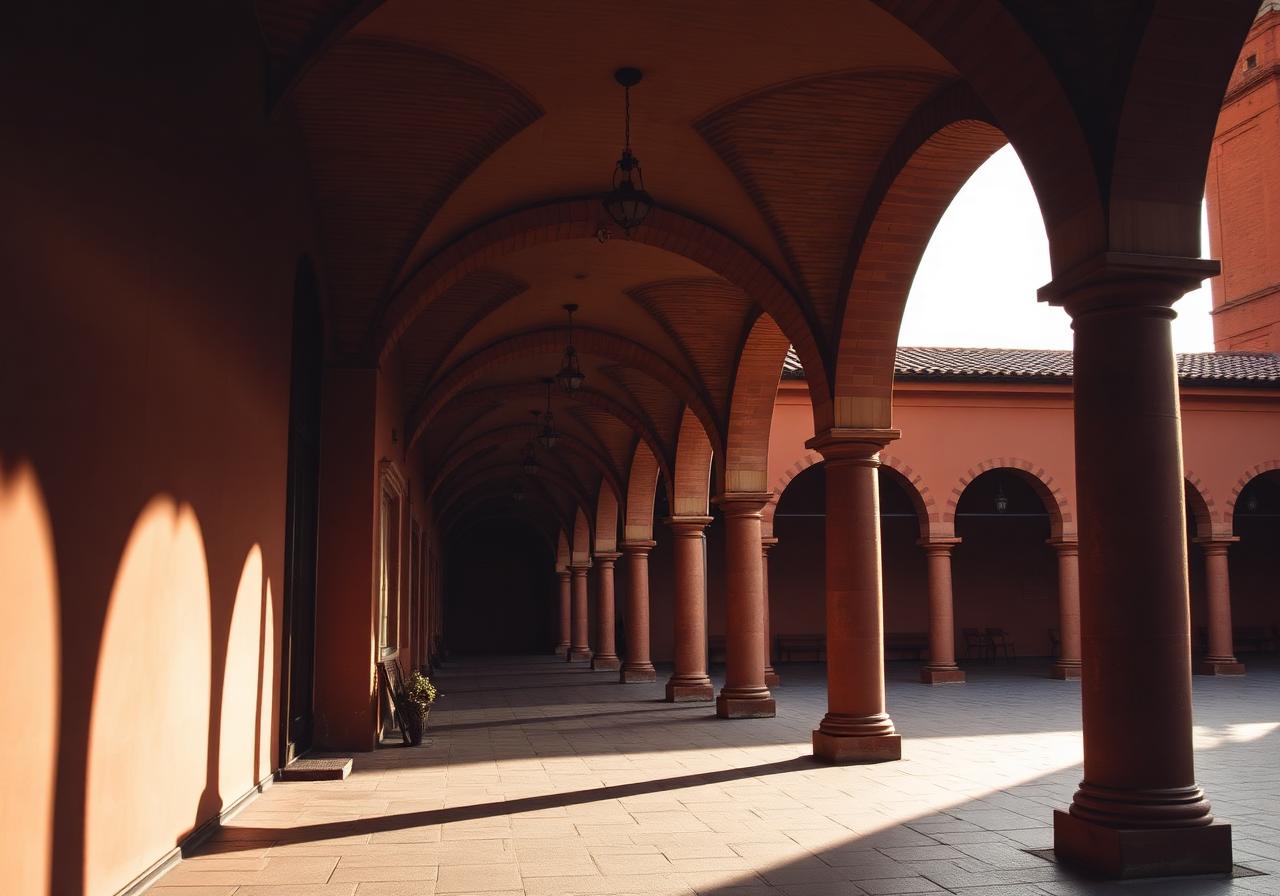
- Bologna's red porticoes (UNESCO) and tortellini in brodo
- Eight UNESCO mosaic monuments in Ravenna
- Modena — Bottura, balsamic and the Ferrari museum
- Motor Valley — Ferrari, Lamborghini, Ducati factory tours
Best time to visit · April–June and September–November. Skip humid August.
The Road That Made a Region
Emilia-Romagna is really two regions fused into one, and a Roman road explains both halves. In 187 BC the consul Marcus Aemilius Lepidus drove the Via Aemilia straight across the plain from Rimini to Piacenza, and the towns strung along it — Parma, Modena, Bologna — became "Emilia." The eastern half, "Romagna," took its name from the long centuries it stayed under Byzantine and then papal rule, with Ravenna as its capital. That split personality runs through everything here.
Ravenna's moment was extraordinary: in the 5th century it became the capital of the dying Western Roman Empire, then of Byzantine Italy, and its churches were lined with gold mosaics so luminous they still rank among the greatest in the world — eight UNESCO monuments where emperors once prayed. Bologna's claim is different: its university, founded in 1088, is the oldest in the continuous Western world, which earned the city one of its three nicknames — La Dotta, "the Learned" (the others being La Grassa, "the Fat," for its food, and La Rossa, "the Red," for its bricks and its politics). In between, powerful Renaissance dynasties — the Este in Ferrara and Modena, the Farnese in Parma — left courts, castles, and a thick scatter of fortresses across the countryside.
Italy's Pantry, and Its Engine
This is, by wide agreement, Italy's greatest eating region — even Italians from elsewhere concede it. The list of foods born here reads like a roll call of the national table: Parmigiano-Reggiano, Prosciutto di Parma, balsamic vinegar from Modena, mortadella from Bologna, and the fresh egg pasta — tortellini, tagliatelle al ragù, lasagne — that the region perfected. And in a tight cluster near Modena sits "Motor Valley," birthplace of Ferrari, Lamborghini, Maserati, Ducati, and Pagani. Few places pair such richness of table and engineering. The region also produced Verdi, Toscanini, Pavarotti, and Fellini — a cultural output as outsized as its appetite.
Start here if you have a long weekend.
Italy's pantry — porticoes, pasta, balsamic.
Five doorways into Emilia-Romagna — each town with its own light, language, and rhythm.
Bologna
Red-bricked, porticoed, food-mad — Europe's oldest university city.
Parma
Soft Po-valley elegance — Verdi, parmigiano, prosciutto.
Modena
Aged balsamic, opera, Ferrari — and Massimo Bottura.
Ravenna
Byzantium in Italy — eight UNESCO mosaic monuments.
Brisighella
Three rocks, an ochre village, Italy's first DOP olive oil.