Lombardy
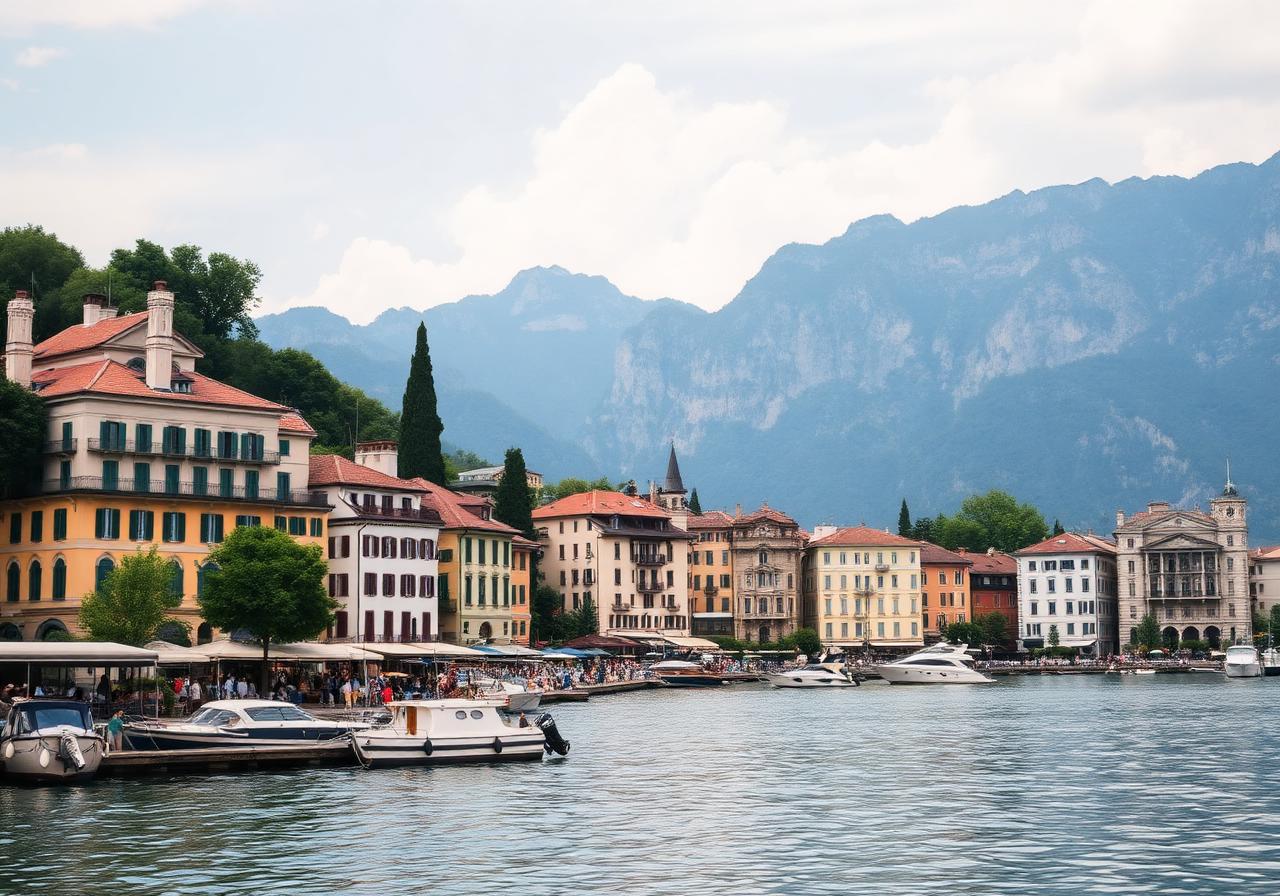
Past Milan's design district, Lombardy unfolds into glacial lakes ringed by villas, gardens and the Alps.
Five reasons Lombardy stays with you.
- Lake Como villas, Lake Garda's olive-grove shores
- Milan — design capital, Last Supper, Duomo rooftop
- Renaissance Mantua — Palazzo Te frescoes
- Walled Bergamo Alta and the Franciacorta sparkling wine country
- Easy alpine access to the Stelvio and Valtellina
Best time to visit · April–June and September–October. Lakes loveliest in shoulder season.
The Land of the Lombards
Lombardy takes its name from the Lombards, a Germanic people who swept into Italy after Rome fell and made Pavia their capital — though the region's story runs far deeper, back to the prehistoric rock carvings of the Val Camonica and to Milan's days as a capital of the late Western Roman Empire, where Saint Ambrose baptized Saint Augustine and the Edict of Milan granted Christians their freedom in 313.
Lombardy's defining age, though, was the medieval and Renaissance one. By the 11th century its towns — Milan, Cremona, Brescia, Bergamo — had grown rich on the trade flowing between the Mediterranean and the Alps, and threw off their feudal lords to govern themselves as communes. So powerful did they become that, united as the Lombard League, they defeated the Holy Roman Emperor Frederick Barbarossa at Legnano in 1176. (The word "Lombard" itself came to mean a merchant or banker across Europe — hence London's Lombard Street.) Then came the great dynasties: the Visconti and after them the Sforza, who built Milan into one of the wealthiest states of the Renaissance — the Milan of Leonardo da Vinci, who painted The Last Supper here, and Bramante. Centuries of Spanish, then Austrian rule followed, until Lombardy joined unified Italy in 1859.
Lakes, Spires, and Industry
Today Milan is Italy's economic and fashion capital — home of the Duomo's marble spires, La Scala, and the Galleria — but Lombardy is also "the region of lakes," its pre-Alpine waters (Como, Garda, Maggiore, Iseo) ringed with villas that have drawn the wealthy since Roman times, when Pliny the Younger kept his estates on Como. Add the Renaissance jewels of Mantua and Bergamo's walled upper city, and the alpine valleys of the Valtellina, and you have Italy's most economically powerful region — one that still wears its art and history lightly beneath the business suit.
Start here if you have a long weekend.
Beyond Milan — the great northern lakes.
Five doorways into Lombardy — each town with its own light, language, and rhythm.
Bellagio
The 'Pearl of Lake Como' at the fork of the lake.
Varenna
Quieter, slower Como — fishermen's lanes and botanic villas.
Sirmione
A peninsula on Lake Garda crowned by a Scaligero castle.
Bergamo Alta
A walled upper city of Venetian bastions above the plain.
Mantova
A Renaissance court-city embraced by three lakes.