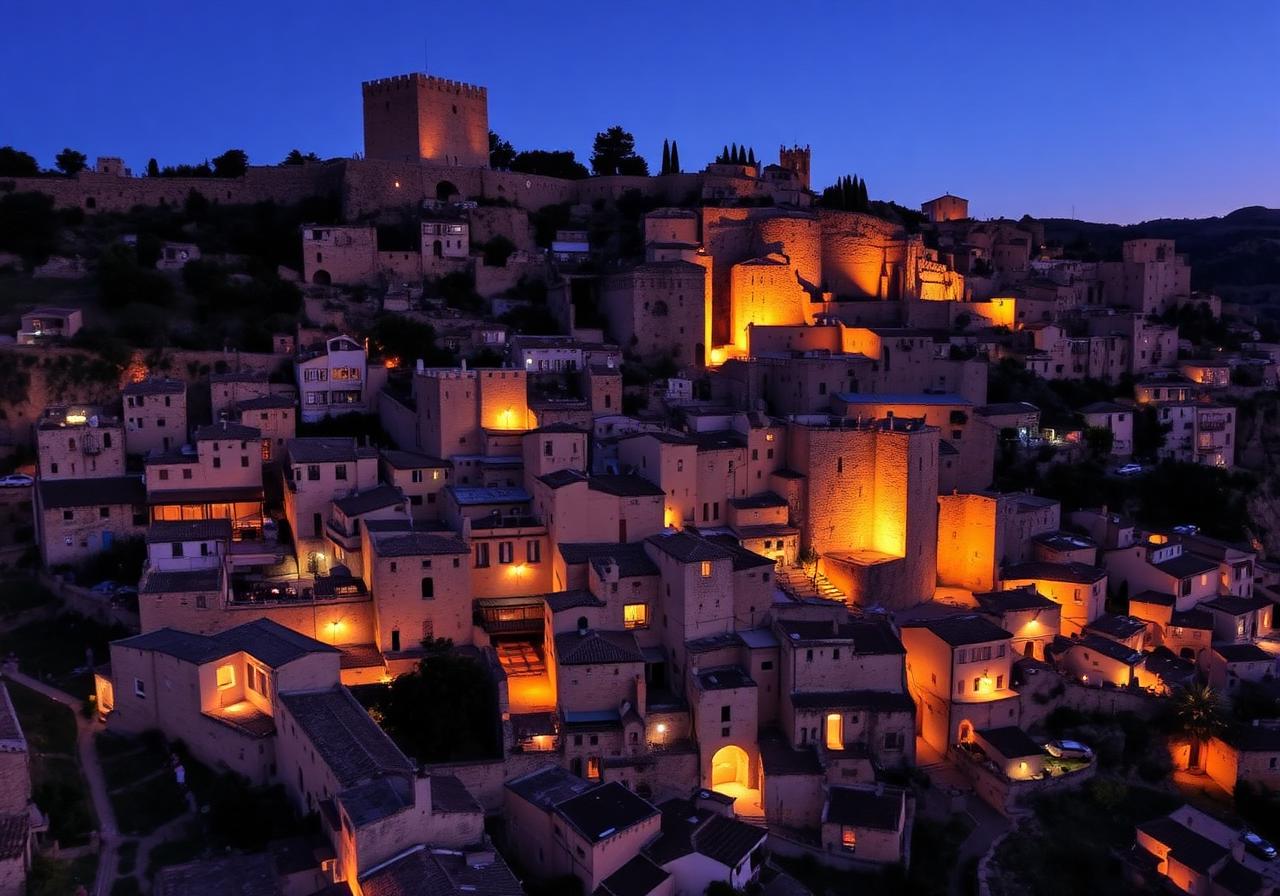
Basilicata
Italy's secret instep — Matera's cave city, Lucanian highlands, and a coast where the Ionian shines silver.
Five reasons Basilicata stays with you.
- Matera's Sassi — cave dwellings inhabited for 9,000 years
- An Ionian and a Tyrrhenian coast, both barely touched
- Pollino and Lucanian Dolomites — Italy's wildest highlands
- Aglianico del Vulture — a serious volcanic red
- Cinematic on screen: Bond, Mel Gibson and Pasolini all shot here
Best time to visit · May–June and September–October. Matera is magical in winter too.
Ancient Lucania
Basilicata — known for most of its history by the older name Lucania, after the Oscan-speaking Lucani who lived here — is one of Italy's least-visited and most ancient corners, a land of mountains, ravines, and two seas. From the 8th century BC the coast was part of Magna Graecia, dotted with Greek city-states like Metaponto, whose ruins still stand on the Ionian plain. Rome came next, then Byzantines, Lombards, and Normans, who made the hill town of Melfi a southern capital where Frederick II later issued his landmark Constitutions in 1231.
But Basilicata's defining place is Matera, and its story is one of Europe's most dramatic. The Sassi — districts of dwellings carved directly into the limestone gorge — have been continuously inhabited since the Paleolithic, making Matera one of the oldest living cities on earth, honeycombed with cave homes and over 150 frescoed rock churches cut by Byzantine monks. By the 20th century the Sassi had become desperately overcrowded and disease-ridden; the writer Carlo Levi exposed their poverty in his 1945 memoir Christ Stopped at Eboli, and the government branded them "the shame of Italy," forcibly relocating the population in the 1950s. The turnaround since has been astonishing: the Sassi became a UNESCO World Heritage Site in 1993, Matera was named a European Capital of Culture in 2019, and Hollywood now uses its biblical streetscape as a stand-in for ancient Jerusalem.
A Region Apart
Beyond Matera, Basilicata stays wild and proud. The Lucanian Dolomites cradle medieval villages like Castelmezzano; the Pollino, Italy's largest national park, spreads across the south; and on the Tyrrhenian coast Maratea, "the Pearl of the Tyrrhenian," watches the sea beneath its mountaintop Christ. This is a region where old culture and tradition have changed little — unhurried, unspoiled, and intensely proud of its independence.
Start here if you have a long weekend.
Ancient stones and the Sassi of Matera.
Five doorways into Basilicata — each town with its own light, language, and rhythm.
Matera
One of the world's oldest continuously inhabited cities — a cave-carved UNESCO wonder.
Maratea
A Tyrrhenian secret — 32 km of dramatic coast crowned by the Christ Redeemer.
Pietrapertosa
An eyrie village hanging from the Lucanian Dolomites.
Aliano
Carlo Levi's exile village — pale calanchi badlands.
Venosa
Birthplace of Horace, ringed by Roman ruins and a Norman abbey.